
EST. 2001 // EP.0247
A Los Angeles studio building hyper-realistic virtual humans, multi-modal AI avatars, cinematic stories, and XR & holographic experiences — for the world's most iconic artists, estates, and institutions.

VALIS has pioneered the creation of virtual artists since 2001 — two decades before "AI avatar" became a category. Our mission: to revolutionize entertainment and education by creating hyper-realistic, intelligent digital humans in partnership with the world's most important IP owners. To preserve legacy. To achieve a kind of immortality.
VALIS Studio · Est. Los Angeles 2012 · Built on the founder's archive since 1988 — work before 2012 credited to Peter Martin; work since carries the studio's name.

Academy Award nominated. Emmy winning. BAFTA winning. A creative futurist who has spent nearly four decades at the intersection of music, technology, and moving image — from Wired on Channel 4 and Factory Records FAC 211 in 1988, through CREATEC under Lord David Puttnam, to VALIS AI in 2026.
Current work includes confidential avatar productions with major music icons, estates, and entertainment IP holders — shown privately to qualified partners under NDA.
A 25-year body of craft across television, film, music video, and documentary — the constant beneath every era, repeatedly first to the next tool. From Wired on Channel 4 (1988) to Phoo Action (BAFTA, 2008) to Waste Land (Academy Award nominee, 2010), and now into the future of broadcast via real-time virtual-production stages (HARMAN at CES 2021).
Hyper-realistic digital doubles of the world's most iconic artists, actors, and educators. Any age. Any language. Any career era. A new form of legacy preservation — and an IP holder's dream. Two decades of frontier R&D, from the UK Government's Avatar Lab at CREATEC (1998) to the first virtual human on the cover of TIME (2020). The throughline from SWEET (2000, world's first digital fashion film with a virtual model) to MLK / TIME to VALIS AI in 2026.

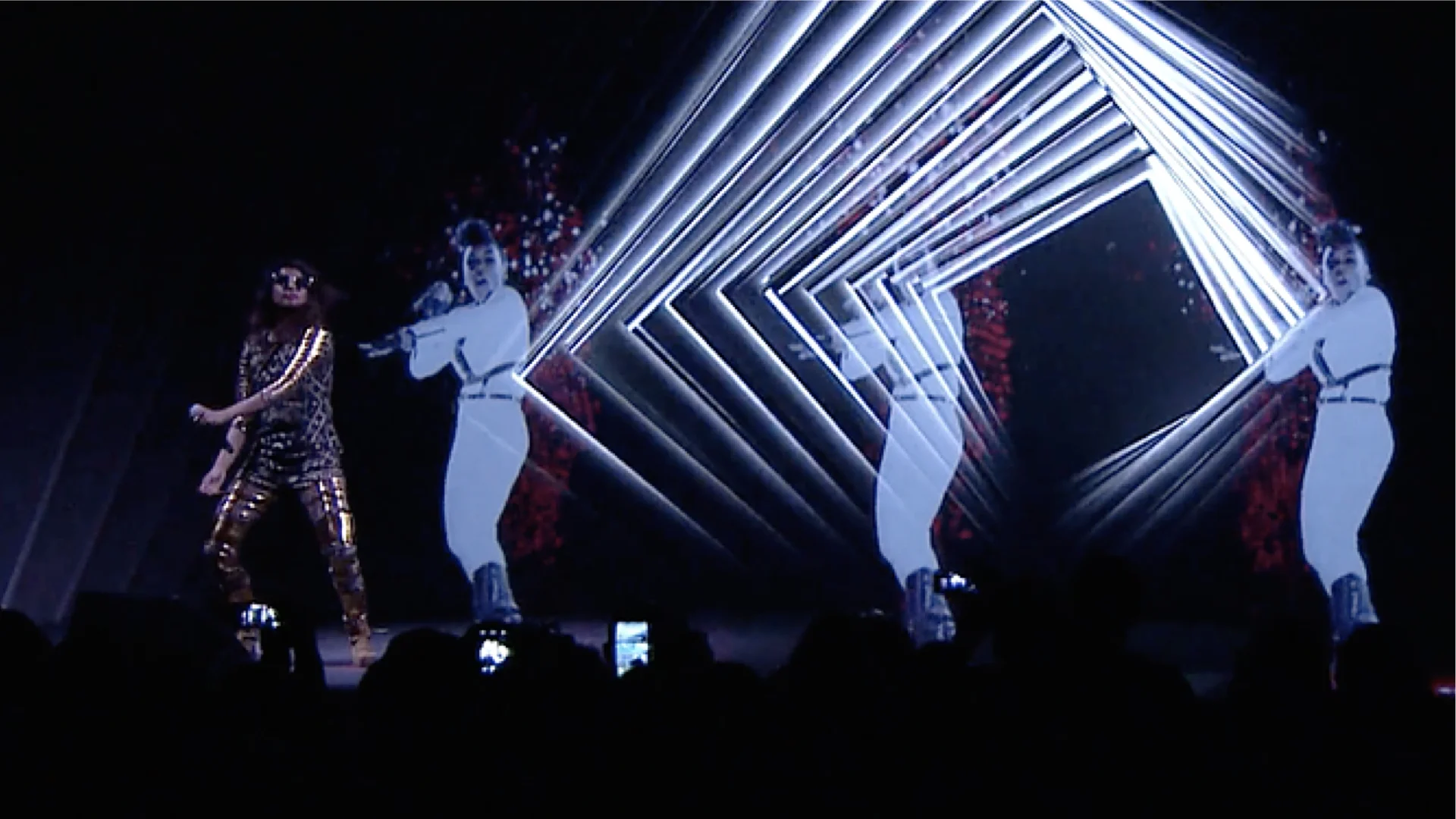
The two newest stages. XR — VR, AR, interactive, and metaverse — including Sports Illustrated Swim VR (the only VR project to ship at consumer scale, with 1M+ headsets distributed) and Run The Jewels — Crown (NYT VR, captured on a bespoke 3D 360° camera built by Andrew Shulkind, now SVP at MSG Sphere Studios). Live Holographic — the world's first bi-coastal holographic duet (M.I.A. × Janelle Monáe, Audi A3, 2014) and Justin Timberlake's headset-free Holodome installation at MoPOP, shot on the 9.2K Lytro Immerge lightfield camera with ECCO VR spatial audio (2018).
Four transmissions from the archive. The full record — thirty-five projects across ten chapters — lives in the Chronicle.
Much of VALIS's current and recent work is under non-disclosure. AI Avatar productions for legacy music estates, touring artists, major entertainment IP holders, and holographic venue partners are not shown publicly.
Selected current and recent work is available privately to qualified partners — broadcasters, estate holders, artist management, venue operators, brand teams, and production partners — under NDA.